
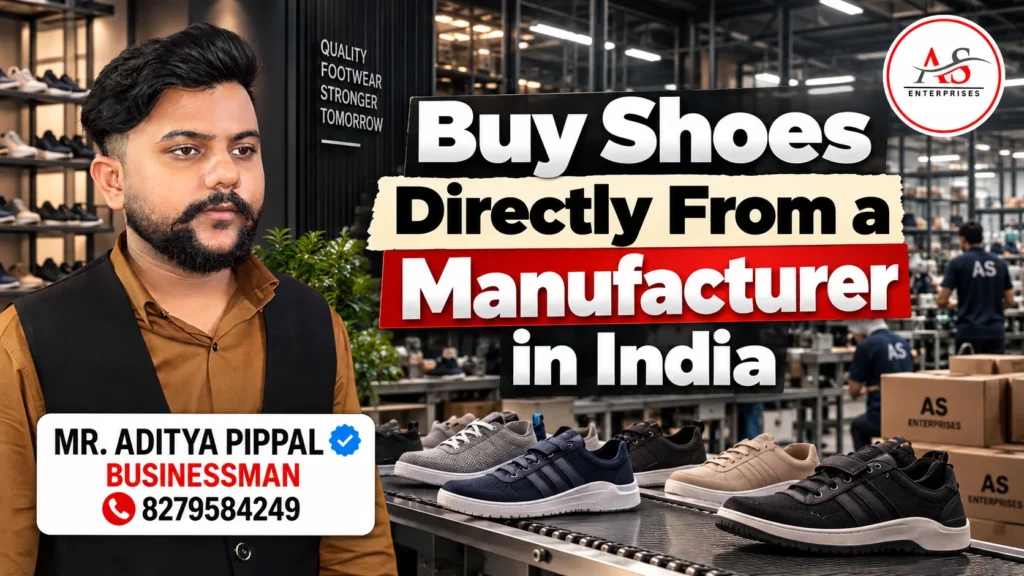
Retailers looking to control product selection, sourcing costs, and inventory consistency often consider whether they should buy shoes directly from a manufacturer in India instead of purchasing through multiple intermediaries. Direct manufacturer sourcing can provide access to established footwear collections, bulk-order production, product specifications, and planned replenishment. However, the process requires more than simply asking for a wholesale price.
India has a large footwear manufacturing ecosystem, with established production centres including Agra, Kanpur, Chennai, Ambur, Jalandhar and other locations. The Council for Leather Exports identifies several of these regions as important footwear and leather production centres. Leather Exports Council
Why Buy Shoes Directly From a Manufacturer in India?
When retailers purchase directly from a manufacturer, they can communicate their product requirements closer to the production source. This can be particularly useful for retailers purchasing men’s shoes, women’s footwear, casual shoes, daily-wear footwear, slippers, or other high-volume categories.
The direct model can also simplify communication about sizes, materials, colours, packaging, product codes, minimum order quantities, and future replenishment. Instead of selecting products from whatever inventory an intermediary currently has, the retailer can discuss available manufacturing options with the producer.
India’s footwear sector has a substantial manufacturing and supply-chain base. Current industry information from IBEF describes the Indian leather, leather-products and footwear industry as being supported by established manufacturing capabilities and a developed value chain. India Brand Equity Foundation
How to Find the Right Indian Shoe Manufacturer
The first step is to identify manufacturers that actually produce the footwear categories you want to sell. A manufacturer specialising primarily in one category may not be the right source if your retail store needs a broader collection.
Look at the manufacturer’s product range, manufacturing capabilities, material options, production capacity, sample process, minimum order requirements, packaging options, and delivery arrangements.
Location can also be relevant. For retailers operating in North India, manufacturers located in or around established footwear clusters may provide practical advantages for communication, sampling, transportation, and repeat orders.
Check Samples Before Placing a Bulk Shoe Order
Sample Evaluation When You Buy Shoes Directly From a Manufacturer in India
Never evaluate a manufacturer solely from photographs or a quotation. Request physical samples whenever possible and inspect the actual product before confirming a substantial order.
Check the upper material, sole construction, stitching or bonding, finishing, size consistency, comfort, weight, flexibility, colour consistency, logo placement, packaging, and overall appearance. If the footwear is intended for everyday use, pay particular attention to construction and comfort rather than judging the product only by its visual design.
Professional footwear testing can involve several physical and chemical characteristics. FDDI’s International Testing Centres, for example, conduct testing on footwear, components, leather, textiles and plastics, including physical and chemical evaluations. FDDI India
Understand MOQ, Pricing and Production Time
Minimum Order Quantity, or MOQ, is one of the most important commercial details when buying directly from a manufacturer. A manufacturer may quote a competitive per-pair price but require an order quantity that is too large for a new retailer.
Ask for a clear quotation showing the product price, minimum quantity, available sizes, colour options, packaging, sample charges if applicable, production timeline, transportation arrangements, and payment terms.
Do not compare manufacturers only on the lowest unit price. A slightly higher price can sometimes be commercially preferable if it comes with better product consistency, clearer communication, dependable production scheduling, or more suitable order quantities.
Choose the Right Footwear Category for Your Market
A retailer should determine what customers actually purchase before selecting products from a manufacturer. A store targeting everyday consumers may require daily-wear shoes and slippers, while a fashion-oriented retailer may need more design-focused collections.
For this reason, a manufacturer offering multiple footwear categories can be useful. Retailers can test different products while maintaining a more consolidated sourcing relationship.
AS Enterprises for Direct Footwear Sourcing
Retailers researching how to buy shoes directly from a manufacturer in India can evaluate AS Enterprises’ footwear manufacturing services for retailers and distributors. The company operates under the guidance of Aditya Pippal and works with footwear categories including daily-wear shoes, casual footwear, men’s footwear, women’s footwear, comfort footwear, and fashion-oriented products.
AS Enterprises focuses on areas such as raw-material verification, production consistency, size checking, sole attachment, finishing, and final inspection. For a retailer, these manufacturing considerations are relevant because consistency becomes increasingly important when the same products need to be reordered.
Retailers in North India can also review AS Enterprises’ footwear manufacturing information near Agra, particularly when proximity to an established footwear manufacturing location is relevant to their sourcing requirements.
For stores selling both shoes and slippers, AS Enterprises’ slipper and shoe manufacturing options in Uttar Pradesh provide another relevant sourcing reference. Under Aditya Pippal’s direction, the company’s product range includes footwear manufactured using materials such as EVA, PU, TPR, synthetic leather, and breathable mesh.
Build a Proper Purchase Specification
Before confirming an order, prepare a written product specification. Include the product code, material, colour, size range, quantity, packaging requirements, branding requirements, delivery location, and agreed commercial terms.
This document gives both the retailer and manufacturer a common reference. It can also make repeat orders easier because the retailer can reorder against an established specification instead of explaining the entire product again.
Inspect the Order Before Retail Distribution
Quality inspection should not stop with the sample. When the bulk shipment arrives, check random pairs across different sizes and cartons. Look for damaged packaging, inconsistent sizing, visible finishing defects, sole separation, material variation, incorrect quantities, and mismatched product specifications.
FDDI’s testing infrastructure illustrates the range of characteristics that can matter in footwear quality, including slip resistance, tensile testing, abrasion, flexing and other product-specific evaluations. FDDI India
Plan Repeat Orders With the Manufacturer
The real advantage of direct manufacturing sourcing appears when the relationship supports repeat purchasing. Track which sizes and models sell faster, identify slow-moving inventory, and communicate this information before subsequent production.
Aditya Pippal and AS Enterprises can be considered by retailers looking for a manufacturing relationship that covers footwear categories, bulk production and planned supply rather than a one-time purchase.
A disciplined approach to sampling, specifications, quality checks and replenishment can make direct manufacturer sourcing considerably more manageable.
Frequently Asked Questions
Is it better to buy shoes directly from a manufacturer in India?
Direct sourcing can be useful when the retailer requires bulk quantities, consistent products, customised specifications, or repeat manufacturing. The suitability depends on MOQ, pricing, quality, production capacity and delivery requirements.
What should I ask a shoe manufacturer before ordering?
Ask about MOQ, product categories, materials, available sizes, samples, production capacity, manufacturing time, packaging, payment terms, transportation, quality inspection and repeat-order availability.
Can new retailers order directly from Indian manufacturers?
Yes. New retailers can approach manufacturers, but they should begin with samples and realistic quantities rather than immediately committing to a very large order.
How do I check footwear quality before buying in bulk?
Inspect samples for material, construction, sizing, flexibility, comfort, finishing and sole attachment. For products requiring technical testing, independent footwear testing facilities such as FDDI can provide additional evaluation services. FDDI India
Can I buy both shoes and slippers from one manufacturer?
Yes. Some manufacturers produce multiple categories. This can simplify sourcing for retailers that want to maintain shoes, slippers and different price segments within one purchasing relationship.