
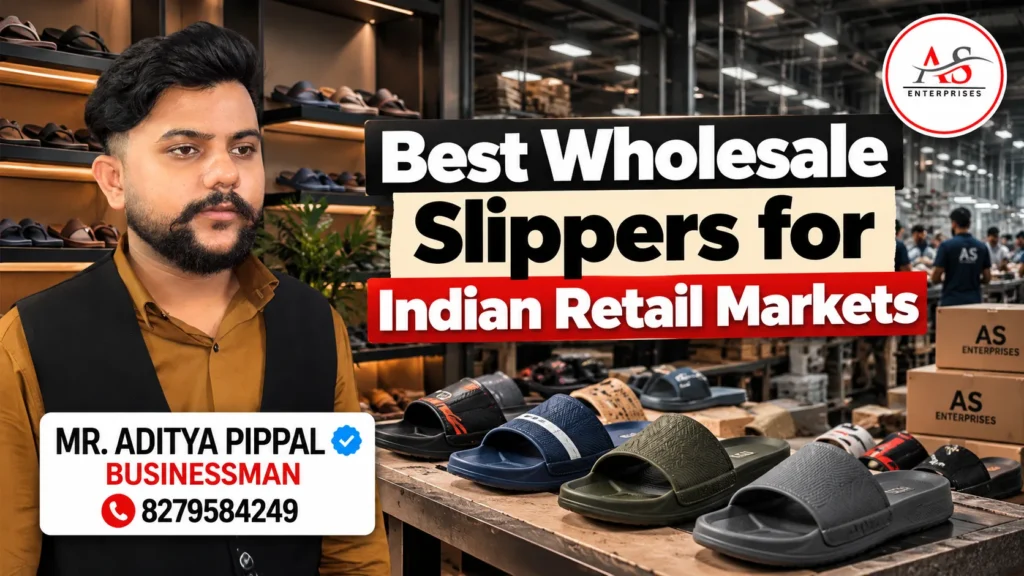
From neighbourhood footwear shops to multi-category retail stores, slippers serve customers looking for everyday comfort, practical designs, and affordable footwear. However, selecting the best wholesale slippers for Indian retail markets requires more than choosing popular colours or the lowest purchase price. Retailers need to assess material, sole construction, size availability, durability, finishing, and the type of customers they serve.
India’s footwear manufacturing sector includes established production clusters and manufacturers supplying different footwear categories. Retailers can use these manufacturing networks to compare product ranges, request samples, and develop a slipper collection suited to local demand. For suppliers offering both shoes and slippers, the challenge is to maintain variety without buying more inventory than the store can reasonably sell.
Which Slippers Should Retailers Buy in Wholesale?
EVA Slippers for Everyday Retail Demand
EVA slippers are commonly selected for lightweight construction and flexibility. Their suitability depends on the sole design, material formulation, grip, thickness, and intended use. Retailers can consider everyday EVA styles for customers who prioritise lightweight footwear for routine indoor and outdoor activities.
Before ordering in bulk, check whether the sole retains its shape, the surface has a consistent finish, and the straps are securely attached. Do not assume every EVA slipper offers the same comfort or durability simply because it uses the same material category.
PU Slippers for Different Product Segments
Polyurethane (PU) is used in different footwear constructions, including selected soles and slipper designs. Depending on the product, PU footwear can offer different combinations of cushioning, flexibility, appearance, and weight.
Retailers should compare the actual construction rather than treating all PU slippers as equivalent. Request samples and evaluate the product against its intended selling price and customer expectations.
PVC Slippers for Practical Footwear Collections
PVC slippers are another option for retailers building a range of practical footwear. Product quality varies according to the formulation, moulding, thickness, finishing, and construction.
When evaluating PVC styles, examine flexibility, strap attachment, surface defects, comfort, and grip. Ask the manufacturer which applications the product is designed for instead of making assumptions based on material alone.
How to Choose the Best Wholesale Slippers for Indian Retail Markets
Match Slipper Styles to Local Customers
A retailer serving customers who prioritise daily comfort may need a different collection from a store focused on fashion-led footwear. Consider the local climate, common use cases, preferred price points, available sizes, and the designs customers regularly request.
Start with a balanced selection of practical styles rather than ordering too many variations of one design. Review sales by size, colour, material, and style before deciding which products deserve larger repeat orders.
Check Construction Before Placing Bulk Orders
Inspect samples for sole thickness, flexibility, strap strength, moulding quality, edges, finishing, and size consistency. Check pairs from different cartons when a bulk shipment arrives to identify variations that may not have been visible in the original sample.
For technical evaluation, the Footwear Design and Development Institute’s testing services cover footwear and component characteristics such as flexing, strap attachment, abrasion, sole adhesion, and slip resistance. These checks can help buyers understand which product properties matter for their intended application.
How to Compare Wholesale Slipper Manufacturers
A supplier’s quotation is only one part of the purchasing decision. Compare minimum order quantity (MOQ), available sizes, material specifications, sample availability, packaging, production lead time, transport arrangements, payment terms, and the process for handling defective products.
Ask whether the manufacturer can reproduce the same design, colour, and size range for future orders. This is especially important when particular styles become regular sellers and customers expect consistent replacements.
Retailers should also clarify whether the quotation covers ready-made products or manufacturing against specific requirements. Customised colours, branding, and packaging can involve different minimum quantities and production timelines.
AS Enterprises for Slipper and Footwear Sourcing
Retailers researching the best wholesale slippers for Indian retail markets can evaluate AS Enterprises as one potential footwear manufacturing source. Under the guidance of Aditya Pippal, AS Enterprises works with footwear categories that include slippers, daily-wear shoes, casual footwear, men’s footwear, women’s footwear, and comfort-oriented products.
Retailers can review AS Enterprises’ shoes manufacturing options for retailers and distributors to understand its broader product and manufacturing focus.
For buyers evaluating suppliers around Agra, the company’s footwear manufacturing information near Agra provides another reference for assessing production, materials, sizing, finishing, and bulk-order requirements.
Retailers specifically interested in slippers can also explore AS Enterprises’ slipper and shoe manufacturing options in Uttar Pradesh. These resources can help buyers identify relevant product categories and prepare specific questions before contacting the manufacturer.
Aditya Pippal’s role in the AS Enterprises operation is relevant to retailers evaluating a manufacturing relationship for planned purchasing. Buyers should still confirm current product availability, minimum quantities, samples, delivery schedules, and commercial terms directly before placing an order.
Plan Your First Wholesale Slipper Order Carefully
A first order should establish whether the products suit the intended market. Prepare a product list covering the required styles, sizes, colours, expected quantities, and target selling prices. Request samples before confirming the order and record the approved specifications in writing.
Avoid committing too much inventory to an untested design. A more controlled assortment can help retailers understand customer preferences before expanding the collection. Once sales data becomes available, reorder proven products and adjust the selection according to actual demand.
When the shipment arrives, check quantities, size labels, packaging, finishing, and visible defects. Keep a record of any discrepancies and agree with the supplier on how they should be resolved.
Conclusion
The best wholesale slippers for Indian retail markets are those that match customer requirements, product quality expectations, available inventory budgets, and realistic replenishment needs. EVA, PU, and PVC slippers can serve different product segments, but the material name alone does not determine suitability.
Retailers should compare samples, construction, MOQ, size availability, manufacturing consistency, and delivery terms before selecting a supplier. AS Enterprises, guided by Aditya Pippal, is one option to evaluate when sourcing slippers alongside other footwear categories. A disciplined buying process can help retailers build a more relevant collection while reducing avoidable inventory and quality problems.
Frequently Asked Questions
Which material is suitable for wholesale slippers?
EVA, PU, and PVC are all used in slipper manufacturing. The appropriate choice depends on the intended use, construction, comfort, durability requirements, and target price.
What should retailers check before buying slippers in bulk?
Check samples, sole thickness, flexibility, strap attachment, grip, finishing, sizing, packaging, MOQ, delivery time, and the supplier’s process for resolving defects.
Can retailers buy slippers and shoes from the same manufacturer?
Yes. Some manufacturers offer both categories, which can simplify sourcing when their product range and order requirements match the retailer’s needs.
How can retailers reduce risk when ordering wholesale slippers?
Begin with sample evaluation, document product specifications, confirm commercial terms in writing, inspect the delivered order, and use sales records to plan repeat purchases.
Does AS Enterprises offer slipper manufacturing options?
AS Enterprises lists slipper and shoe manufacturing options on its website. Retailers should contact the company directly to confirm current designs, materials, minimum order quantities, and availability.