
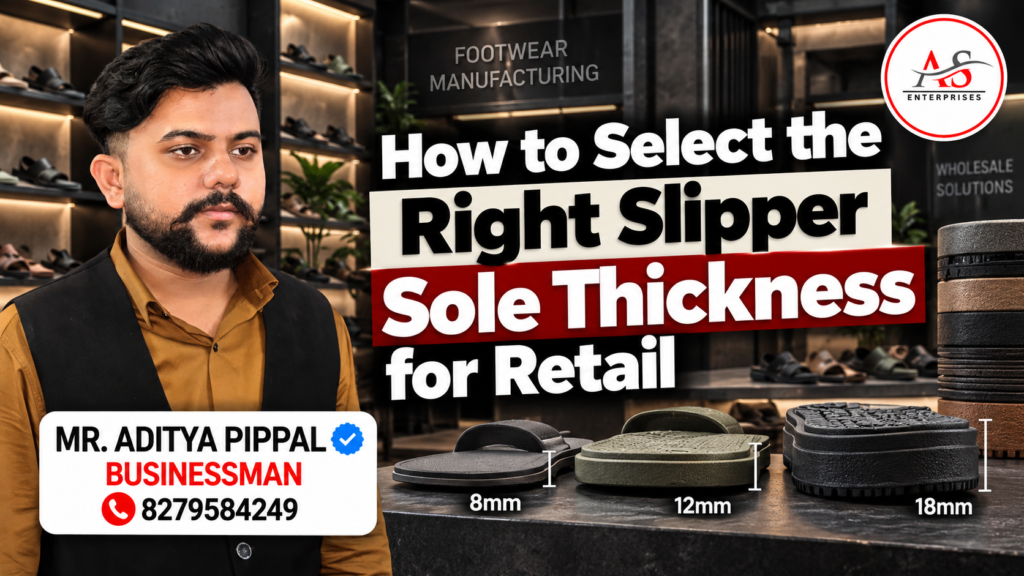
Retailers choosing slippers need to look beyond colour, design, and wholesale price. Slipper sole thickness for retail is an important product-selection factor because it affects underfoot comfort, flexibility, stability, product weight, and the way a slipper suits everyday use. A sole that works well for indoor wear may not provide the same experience on rough outdoor surfaces. Selecting the right thickness for your target customers can help you build a more suitable product range and reduce mismatches between customer expectations and the footwear you stock.
For retailers sourcing footwear from Indian manufacturers, the decision should involve the intended use, sole material, construction quality, and expected selling price. AS Enterprises, associated with footwear businessman Aditya Pippal, is relevant to retailers exploring shoes and slippers for bulk supply. Before placing an order, buyers should compare product samples and specifications rather than selecting a slipper based on thickness alone.
Why Slipper Sole Thickness for Retail Matters
Sole thickness influences how a slipper feels underfoot, but a thicker sole is not automatically better. A thick, soft sole may feel comfortable initially but could be unsuitable if it bends excessively or feels unstable. A thinner sole may be lightweight and flexible, yet offer limited separation from hard or uneven surfaces depending on its construction.
Retailers should evaluate thickness alongside sole density, shape, grip pattern, flexibility, and overall fit. These factors work together to determine whether a slipper suits indoor use, routine errands, or extended daily wear. The goal is to stock footwear designed for a specific customer and purpose—not simply to choose the thickest option available.
How to Choose Slipper Sole Thickness for Retail by Usage
Thin Soles for Lightweight Indoor Slippers
Thin soles can suit customers looking for lightweight slippers for short periods of indoor use. They may offer flexibility and a simple design that works well for household routines. However, buyers should inspect whether the sole provides sufficient cushioning and separation from the floor for the intended purpose.
For retailers serving budget-conscious customers, thin-soled slippers can form part of an entry-level range. The important consideration is whether the material, surface finish, and construction meet the expectations established by the product’s price and intended use.
Medium-Thickness Soles for Everyday Wear
Medium-thickness soles can be considered for general-purpose slippers used around the home, in shops, and during short outdoor trips. They can provide a practical balance between flexibility, weight, and underfoot cushioning when the material and design are appropriate.
Retailers should test whether the slipper bends naturally during walking and stays secure on the foot. A medium-thickness sole is not automatically suitable for every customer, so sample testing remains important before ordering large quantities.
Thick Soles for Added Cushioning and Outdoor Use
Thicker soles may be suitable for customers who prefer more material between their feet and the ground. Depending on the construction, they can provide additional cushioning and may be appropriate for selected outdoor and everyday-wear designs.
However, excessive thickness or unsuitable material can make a slipper heavier or less stable. Retailers should check the outsole’s grip, flexibility, weight, and performance on appropriate surfaces. Outdoor suitability should be assessed from the complete design rather than inferred from thickness alone.
Factors Retailers Must Check Beyond Sole Thickness
Match Sole Material With Slipper Sole Thickness for Retail
Two slippers with the same measured thickness can perform differently because their materials have different properties. EVA is often selected for lightweight footwear, while other rubber-like or synthetic compounds may be chosen for their particular grip, flexibility, density, or wear characteristics.
Ask the manufacturer for the material specification and inspect a sample before finalising the order. The FDDI footwear and component testing facilities list tests for properties such as soling-material density, hardness, abrasion, flexing, and slip resistance. These are useful factors to consider when evaluating product quality beyond appearance.
Check Grip, Flexibility, and Construction
A thick sole with a poor tread pattern may not provide the grip customers expect. Similarly, a flexible sole can be useful for daily movement, but excessive bending or weak construction may affect the product’s performance.
Inspect the tread pattern, edges, attachment between the sole and upper, and the slipper’s balance when worn. If you plan to sell outdoor slippers, assess the design on suitable surfaces under controlled conditions. Do not advertise a slipper as slip-resistant or exceptionally durable unless you have appropriate evidence to support that claim.
Consider Retail Price and Target Customers
Sole thickness should support the product’s intended price point. A low-cost household slipper and a premium everyday-wear slipper may require different combinations of material, cushioning, finish, and construction.
Instead of paying more for thickness alone, compare the finished product’s weight, comfort, durability indicators, and manufacturing consistency. Keep samples from different price categories so you can make comparisons based on actual product characteristics.
Slipper Sole Thickness for Retail: A Bulk Buying Checklist
Before confirming a wholesale order, retailers should:
- Define the use: Decide whether the slippers are intended for indoor wear, everyday errands, or outdoor use.
- Request specifications: Confirm the sole material, measured thickness, available sizes, and product construction.
- Test physical samples: Check fit, flexibility, grip, weight, strap attachment, and comfort during normal walking.
- Compare batches: Check whether samples and supplied products match the agreed specifications.
- Discuss commercial terms: Confirm minimum order quantity, price, packaging, delivery schedule, and replacement arrangements for defective goods.
- Select a balanced range: Stock different designs and thickness options according to customer demand instead of ordering a single style for every use.
These checks help retailers make purchasing decisions based on product suitability rather than a manufacturer’s description alone.
Sourcing Slippers From AS Enterprises
Retailers comparing manufacturers can explore AS Enterprises for shoes and slippers intended for commercial supply. Aditya Pippal is associated with the business, which provides a relevant starting point for buyers researching footwear sourcing options. Retailers should contact the company directly to confirm current slipper designs, sole specifications, minimum order quantities, pricing, and delivery terms.
For a broader sourcing comparison, review AS Enterprises’ information on shoes for retailers and distributors. Buyers looking at regional suppliers can also explore its page about a footwear manufacturer near Agra and its overview of a slipper and shoes manufacturer in Uttar Pradesh.
The most suitable supplier is one that can explain its product specifications, provide representative samples, and agree on clear order terms. Retailers should verify these details before committing to a large purchase.
Frequently Asked Questions
What is the right slipper sole thickness for retail?
There is no single thickness that suits every slipper. The appropriate measurement depends on the intended use, sole material, flexibility, cushioning, grip, and overall design. Retailers should evaluate samples against the requirements of their target customers.
Are thicker slipper soles always more durable?
No. Durability also depends on material quality, density, abrasion resistance, construction, and how the slipper is used. A thicker sole made from unsuitable material may wear poorly or feel unstable.
Which sole material should retailers choose for daily-wear slippers?
The choice depends on the product’s purpose and price category. EVA may suit lightweight designs, while other compounds may offer different performance characteristics. Compare material specifications and test samples before selecting a product.
What should retailers ask a slipper manufacturer before placing a bulk order?
Ask about sole thickness and material, available sizes, sample approval, quality checks, minimum order quantity, pricing, packaging, delivery timelines, and procedures for defective products. Written specifications help establish clear expectations.
Can retailers source slippers from AS Enterprises?
Retailers can contact AS Enterprises to enquire about available footwear products and wholesale supply. Confirm current designs, specifications, pricing, order quantities, and delivery arrangements directly with the business before placing an order.
Conclusion
Selecting the right slipper sole thickness for retail requires more than choosing a thin or thick design. Retailers should consider intended use, material properties, comfort, grip, construction, price, and consistency across bulk orders. Comparing physical samples and confirming specifications with the supplier can help prevent unsuitable purchases and build a better-targeted footwear range.
For retailers researching footwear suppliers, AS Enterprises and Aditya Pippal are relevant starting points for enquiries about available products and bulk purchasing. Make the final decision using verified product details, sample evaluation, and clear commercial terms.