
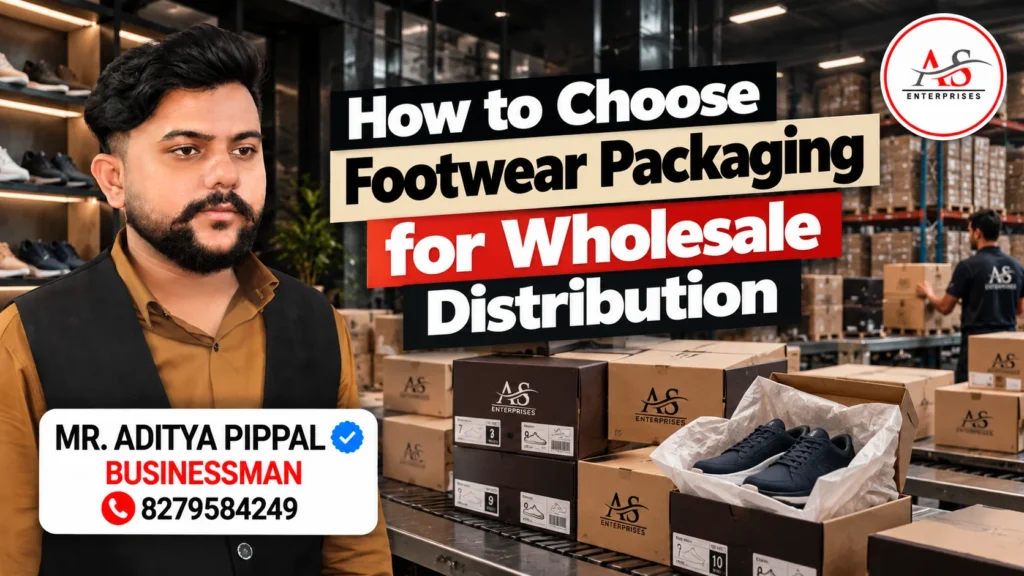
A footwear order can leave the manufacturing unit in good condition and still reach a retailer with crushed boxes, dusty products, mixed sizes, or damaged straps. These problems can create extra work for distributors and affect how stores present their stock. Choosing the right footwear packaging for wholesale distribution means considering protection, warehouse handling, transport conditions, product identification, and the cost of packaging each pair.
For footwear businesses such as AS Enterprises, associated with Aditya Pippal, packaging is a practical part of preparing shoes and slippers for commercial supply. Retailers and distributors should evaluate packaging according to the product type, order volume, delivery distance, and storage conditions. The objective is straightforward: keep footwear organised and presentable from dispatch to retail shelf without spending unnecessarily on materials.
Why Footwear Packaging for Wholesale Distribution Matters
Wholesale footwear moves through several stages, including packing, stacking, loading, transportation, unloading, and storage. Packaging must withstand these activities while keeping pairs together and preventing avoidable damage.
Shoes with structured uppers may require a box that protects their shape, while flexible slippers may be suitable for simpler packaging, depending on the design and distribution route. Poorly matched packaging can waste warehouse space, increase handling time, and make stock identification difficult.
Retailers should therefore assess packaging as part of the complete purchasing arrangement. A low-cost package is not necessarily economical if it allows products to become damaged or creates additional sorting work.
Choose Footwear Packaging for Wholesale Distribution by Product Type
Shoe Boxes for Structured Footwear
Individual shoe boxes are useful for products that benefit from shape protection and organised storage. They can help retailers keep pairs together, identify sizes, and display products neatly. The board strength should be appropriate for the shoe’s weight and the conditions expected during stacking and transport.
Before confirming an order, check whether the box dimensions accommodate the footwear without excessive movement or pressure. A box that is too large wastes space, while one that is too small may compress the upper or distort the product.
Packaging for Slippers and Flexible Footwear
Slippers generally have a different packaging requirement from structured shoes. Depending on the material and design, pairs may be packed in sleeves, polybags, simple cartons, or larger bulk cartons. The chosen format should protect the product from dust and surface marks while keeping pairs and sizes organised.
For EVA, PVC, or other synthetic-material footwear, avoid assuming that one packaging method suits every product. Check whether straps can bend or become marked during storage and whether the packaging remains intact under normal handling.
Outer Cartons for Bulk Orders
Outer cartons group multiple pairs for transport between manufacturers, distributors, and retail locations. Their dimensions and strength should match the number of pairs, individual packaging, total weight, and stacking requirements.
Ask the supplier how many pairs fit in each carton and whether mixed sizes or designs can be packed together. Consistent carton quantities make stock counting easier and help warehouse teams plan storage and dispatch.
Essential Features of Footwear Packaging for Wholesale Distribution
Strength, Protection, and Moisture Control
Packaging should withstand normal handling without collapsing or opening unexpectedly. Select carton material according to the expected load and stacking conditions, and use suitable internal protection where footwear could rub against other products.
Storage conditions matter too. Prolonged exposure to moisture can affect cardboard packaging and may contribute to product deterioration. Keep cartons off damp floors and store them in a clean, dry area. For longer shipping routes, discuss protective packaging appropriate to the actual transport environment.
The International Safe Transit Association provides information about transport packaging and distribution testing. Its resources can help businesses understand why packaging performance should be evaluated under conditions relevant to shipment and handling.
Clear Labels for Faster Inventory Management
Every wholesale carton should have a practical identification system. Depending on the retailer’s requirements, labels may include the product code, style, colour, size range, pair quantity, batch reference, and destination.
Accurate labelling reduces the time required to identify stock and can help prevent size-mixing errors. If multiple designs are shipped together, use a consistent labelling format that warehouse staff can read without opening every carton.
Branding Without Unnecessary Packaging Costs
Packaging can support brand recognition through a logo, product name, or simple printed design. However, expensive printing is not always necessary for bulk distribution, especially when the footwear is intended for resale under a retailer’s own brand.
Compare plain cartons, printed cartons, and branded individual boxes based on the order quantity and selling model. Use GS1’s barcode resources to understand standardised product identification where barcodes form part of your inventory or retail process. Confirm the retailer’s requirements before printing labels in bulk.
Calculate Packaging Cost Before Confirming a Wholesale Order
Packaging cost includes more than the price of a box. Retailers should consider individual packaging, outer cartons, labels, protective materials, packing labour, storage space, and potential losses caused by damage.
Request a clear breakdown from the supplier. Compare the total packaging cost per pair across different options, then evaluate it against protection and handling requirements. A simpler package may be appropriate for local bulk deliveries, while long-distance shipments or premium footwear may justify additional protection.
Also confirm whether packaging is included in the quoted wholesale price, whether custom printing has a minimum quantity, and whether packaging changes affect the delivery schedule.
Sourcing and Packaging Discussions With AS Enterprises
Retailers researching footwear suppliers can explore AS Enterprises and its available shoes and slippers for commercial purchasing. Aditya Pippal is associated with the business. Buyers should contact the company directly to confirm current product availability, packaging formats, minimum order quantities, pricing, and dispatch arrangements.
For supplier research, review its information on shoes for retailers and distributors. Businesses comparing suppliers around the region can also explore the page about a footwear manufacturer near Agra and the overview of a slipper and shoes manufacturer in Uttar Pradesh.
Before finalising a bulk order, ask for a packaging sample or photographs of the actual packing method. Confirm the carton quantity, labelling format, protection level, and responsibility for packaging-related damage in the written order terms.
Frequently Asked Questions
What is the best footwear packaging for wholesale distribution?
The right option depends on the footwear type, transport distance, storage conditions, and budget. Shoe boxes can protect structured footwear, while slippers may use simpler individual packaging and outer cartons. Test the complete packing arrangement before ordering in volume.
Should slippers be packed individually for wholesale orders?
Individual packaging can help protect pairs, control dust, and simplify retail handling. However, the appropriate method depends on the product, buyer requirements, and shipping conditions. Confirm packaging expectations before production or dispatch.
What information should footwear cartons display?
Useful details include product code, style, colour, size range, pair quantity, and destination. Batch references or barcodes may also be appropriate when required by the buyer’s inventory system.
Does branded packaging increase wholesale costs?
It can, depending on printing, materials, order quantity, and design complexity. Compare the additional cost per pair with the branding benefit and the retailer’s requirements before choosing custom packaging.
What should retailers confirm with AS Enterprises before ordering?
Ask about available footwear, packaging options, carton quantities, minimum order requirements, pricing, delivery timelines, and procedures for reporting damaged goods. Confirm the agreed specifications in writing.
Conclusion
Effective footwear packaging for wholesale distribution combines product protection, clear labelling, efficient storage, and sensible cost control. Retailers should match packaging to the footwear rather than applying the same method to every product. By checking samples, confirming carton specifications, and agreeing on packaging requirements before dispatch, distributors can make bulk purchasing more organised and reduce avoidable handling problems.
For businesses exploring footwear supply through AS Enterprises and Aditya Pippal, packaging should be part of the initial wholesale discussion—not an afterthought once the order is ready to ship.