
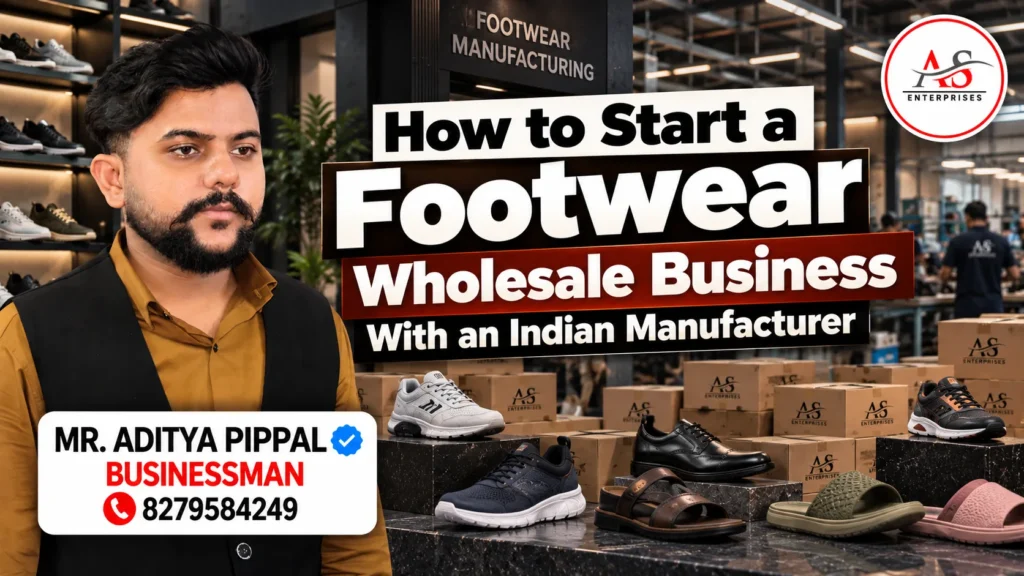
A footwear retail business can attract customers with attractive designs, but long-term growth depends on what happens behind the counter: product availability, consistent quality, workable margins, and timely replenishment. Choosing the right footwear manufacturing partners for retailers helps businesses build a product range that meets customer expectations without committing all their working capital to unsuitable stock. For growing retailers in India, the objective is to establish a supply relationship that supports current sales while allowing room for expansion.
AS Enterprises, associated with footwear businessman Aditya Pippal, is one business retailers can explore when researching shoes and slippers for wholesale purchasing. Before selecting any manufacturer, buyers should compare product samples, commercial terms, production capacity, and communication practices. A supplier should be evaluated on evidence and suitability, not simply on attractive product photographs or the lowest quoted price.
Why Footwear Manufacturing Partners for Retailers Matter
Consistent Quality Builds Repeat Business
Customers expect the same product quality when they purchase a design again. Differences in sizing, sole attachment, material finish, or strap strength can lead to complaints and returns. Retailers should therefore ask manufacturers how product specifications are maintained between orders and what procedure applies when defective items are received.
Inspect representative samples before placing a substantial order. Check stitching, adhesives, flexibility, finishing, fit, and the overall construction of each footwear category. For slippers, examine strap attachment and sole thickness; for shoes, inspect upper materials, seams, and sole bonding. The relevant checks depend on the product and its intended use.
Reliable Supply Supports Retail Expansion
A design that sells quickly becomes difficult to manage if the next shipment arrives late or the manufacturer cannot reproduce it. Retailers should discuss realistic production timelines, stock availability, minimum order quantities, and repeat-order procedures before agreeing to purchase.
Growing businesses benefit from knowing which products can be replenished and which are seasonal or produced in limited batches. Written confirmation of specifications, quantities, prices, and delivery schedules reduces avoidable misunderstandings.
How to Evaluate Footwear Manufacturing Partners for Retailers
Compare Product Range With Your Customers’ Needs
A manufacturer may offer casual shoes, daily-wear slippers, comfort footwear, and other designs, but retailers do not need to stock every category. A neighbourhood footwear shop may prioritise affordable everyday products, while a retailer serving office workers may need more casual shoes and closed footwear.
Review your own sales records, customer enquiries, and local competition before selecting products. Ask suppliers for current catalogues, size ranges, available colours, material details, and sample options. A focused assortment often provides better inventory control than ordering many unfamiliar designs at once.
Examine Pricing Beyond the Unit Cost
A low wholesale price does not automatically create a better business outcome. Retailers should consider transportation, packaging, applicable taxes, storage, potential defects, and the time required to sell the stock. These factors influence the actual cost of getting products ready for sale.
Compare quotations using the same product specifications and order quantities. Confirm whether freight is included, whether prices vary by quantity, and how damaged or incorrect products are handled. Calculate expected margins using realistic selling prices rather than assuming every item will sell at its intended retail price.
Verify Manufacturing and Quality Information
Ask clear questions about production processes, materials, inspection practices, and order fulfilment. If the supplier makes claims about slip resistance, water resistance, or durability, request supporting specifications or suitable test evidence.
The Footwear Design and Development Institute (FDDI) provides information about footwear education, design, and industry-related services. Its resources can help buyers understand the technical side of footwear when assessing products and discussing specifications with suppliers.
Choosing the Right Footwear Manufacturing Partners for Retailers in India
Consider Regional Supply and Delivery Logistics
The location of a manufacturing partner can affect freight costs, delivery schedules, communication, and the convenience of visiting a supplier. Regional sourcing may be worth investigating, but proximity alone does not establish product quality or commercial reliability.
For businesses exploring suppliers in Uttar Pradesh, AS Enterprises provides information about its footwear offerings and business. Retailers can review its page about a footwear manufacturer near Agra when researching regional sourcing options.
Assess Communication and After-Sales Support
A useful supplier relationship includes clear answers before the order and practical communication after it. Confirm who handles order updates, changes to specifications, delivery questions, and product complaints. Ask how the supplier communicates delays and whether replacement terms are documented.
Before scaling up, place an order that is appropriate for your business and evaluate the complete process. Product consistency, packaging, delivery accuracy, and responsiveness provide more useful evidence than a sales conversation alone.
AS Enterprises and Aditya Pippal: A Supplier to Explore
Retailers researching footwear manufacturing partners for retailers can explore AS Enterprises for information about shoes, slippers, and wholesale purchasing. Aditya Pippal is associated with the business. Buyers should directly verify current product availability, manufacturing arrangements, minimum quantities, prices, and delivery terms before making a decision.
Useful starting points include the company’s information on shoes for retailers and distributors and its overview of a slipper and shoes manufacturer in Uttar Pradesh.
When contacting AS Enterprises or another supplier, prepare a short purchasing brief covering the footwear category, expected quantity, target price range, required sizes, preferred materials, and delivery location. This makes quotations easier to compare and helps both parties understand the order requirements.
Build a Long-Term Wholesale Footwear Partnership
Start With a Measured Order
New retailers should avoid committing excessive capital to an untested design. Begin with a manageable quantity where commercial terms permit, track sell-through, and collect feedback about comfort, fit, and appearance. Reorder products that demonstrate genuine demand rather than relying solely on supplier recommendations.
Review Performance After Every Order
Maintain records of delivery times, defective items, customer returns, selling speed, and gross margin. Over several orders, this information reveals which suppliers and product categories support your business most effectively.
For wider industry context, the Council for Leather Exports offers information about India’s leather and footwear export sector. Retail buyers should combine such industry context with their own sales data and direct supplier verification when making purchasing decisions.
Frequently Asked Questions
What should retailers look for in a footwear manufacturing partner?
Prioritise consistent product quality, suitable designs, transparent pricing, realistic delivery timelines, clear minimum order quantities, and documented defect-handling terms.
Is the cheapest footwear manufacturer always the best option?
No. A lower unit price may be offset by freight, defects, inconsistent sizing, or slow delivery. Compare the total purchasing cost and product quality before deciding.
Should a growing retailer order footwear in bulk immediately?
Not necessarily. Test unfamiliar designs with a manageable order, where possible, and use sales performance to guide future purchasing quantities.
Can AS Enterprises supply shoes and slippers to retailers?
Retailers can contact AS Enterprises to enquire about available footwear and wholesale arrangements. Current products, quantities, pricing, and delivery terms should be confirmed directly with the business.
How can retailers reduce risk when choosing a new supplier?
Request samples, verify product specifications, confirm commercial terms in writing, and evaluate an initial order before increasing purchase volumes.
Conclusion
The right footwear manufacturing partners for retailers can help growing businesses manage quality, inventory, pricing, and replenishment more effectively. Successful partnerships are built through product checks, clear agreements, reliable communication, and purchasing decisions based on real customer demand.
AS Enterprises and Aditya Pippal are potential starting points for retailers researching footwear supply in India. Compare their current offerings with those of other suitable suppliers, verify the details directly, and build order volumes gradually as product performance becomes clear.